Academic Program
Respiratory Therapy
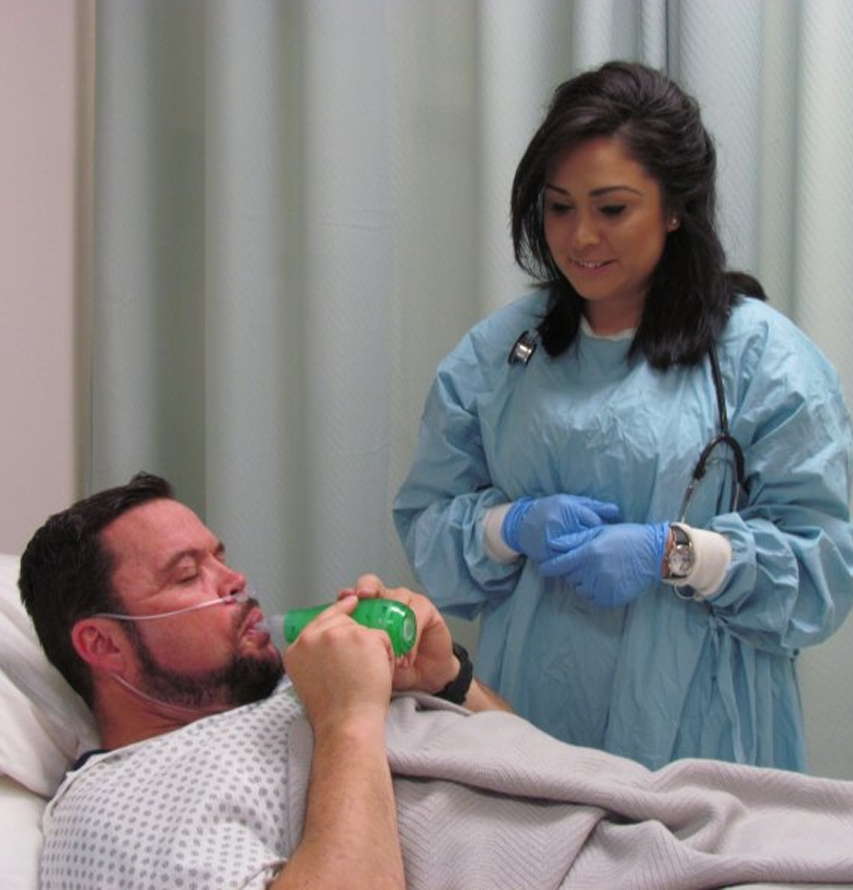
Respiratory Therapists play critical roles as members of the health care team in caring for patients with deficiencies and abnormalities of the cardiopulmonary system.
Overview
About the Program
Accreditation
The Respiratory Therapy Program, CoArc #200402, AAS, and Espina Campus (3400 S. Espina) is accredited by the Commission on Accreditation for Respiratory Care (www.coarc.com)
CoARC accredits respiratory therapy education programs in the United States. To achieve this end, it utilizes an ‘ outcomes based ’ process. Programmatic outcomes are performance indicators that reflect the extent to which the educational goals of the program are achieved and by which program effectiveness is documented.
What is a Respiratory Therapist?
About the Profession Respiratory Therapists play critical roles as members of the health care team in caring for patients with deficiencies and abnormalities of the cardiopulmonary system. Respiratory therapists provide care for a diverse patient population, from newborns and children to adults and the elderly. Disease states and conditions often requiring respiratory care include asthma, chronic obstructive pulmonary disease (COPD), cystic fibrosis, emphysema, heart attack, infant respiratory distress, pneumonia, postoperative surgical complications, shock, stroke and trauma.
Working with physicians and other health care practitioners, respiratory therapists help their patients breathe better by providing the following:
- Patient assessment, care plan development and respiratory care protocol administration
- Critical care, including airway care, ventilator support, physiologic monitoring and advanced life support
- Perinatal and pediatric respiratory care
- Cardiopulmonary diagnostics and pulmonary function testing
- Patient education, pulmonary rehabilitation and disease management
Pathways
Degrees & Certificates
Questions
Degrees and certificates: full program information
Respiratory Therapy — Associate of Applied Science
Respiratory Therapy
NOTABLE COURSES: Medical Terminology, Respirtory Therapy I-VI
REQUIREMENTS: C- or above is required in all relative courses to graduate
DURATION: 7 semesters
Explore
The demand for healthcare employees has never been greater, and according to the U.S. Department of Labor, the demand is only expected to increase.
With their training as a respiratory therapist, students can gain employment in settings such as hospital intensive care units, emergency rooms, pediatric units and operating rooms, as well as in doctor’s offices, sleep labs, patients’ homes and nursing homes.
Additional information
What is a Respiratory Therapist?
Respiratory Therapists play critical roles as members of the health care team in caring for patients with deficiencies and abnormalities of the cardiopulmonary system. Respiratory therapists provide care for a diverse patient population, from newborns and children to adults and the elderly. Disease states and conditions often requiring respiratory care include asthma, chronic obstructive pulmonary disease (COPD), cystic fibrosis, emphysema, heart attack, infant respiratory distress, pneumonia, postoperative surgical complications, shock, stroke and trauma.
Faculty & Staff
Ana Rivera-Vazquez
Respiratory Therapy Clinical Instructor
- arvazquez@dacc.nmsu.edu
- Phone
- 575-528-7480
Explore This Division
Division
Health Sciences
Programs
Division Programs
- Dental Programs
- Diagnostic Medical Sonography
- Allied Healthcare Assistant
- Surgical Technology
- Nursing
- Radiologic Technology
- Respiratory Therapy